Word lists
Paste target words for a class unit, exam topic, professional glossary, or vocabulary collected elsewhere.
Generate focused vocabulary practice from your own word list.
Add 3-20 target words or extract them from classroom text.
Check each draft definition and example before generating.
Choose the format, question mix, difficulty, and learner level.
multiple choice
Which vocabulary word best matches this clue? able to recover after difficulty or change.
resilient is the target word. Use a natural sentence and one clear context clue.
fill blank
Complete the sentence: The speaker chose words that were ____ when explaining the idea.
adaptable is the target word.
Create a free vocabulary quiz or test from a word list, article, webpage, or PDF. Choose question types, edit the results, review the answer key, and export a ready-to-use quiz online. ClaviSay keeps questions connected to the English you read, teach, or save, so practice checks context as well as definitions.
Built for teachers, tutors, and learners who need a quiz they can inspect before sharing.
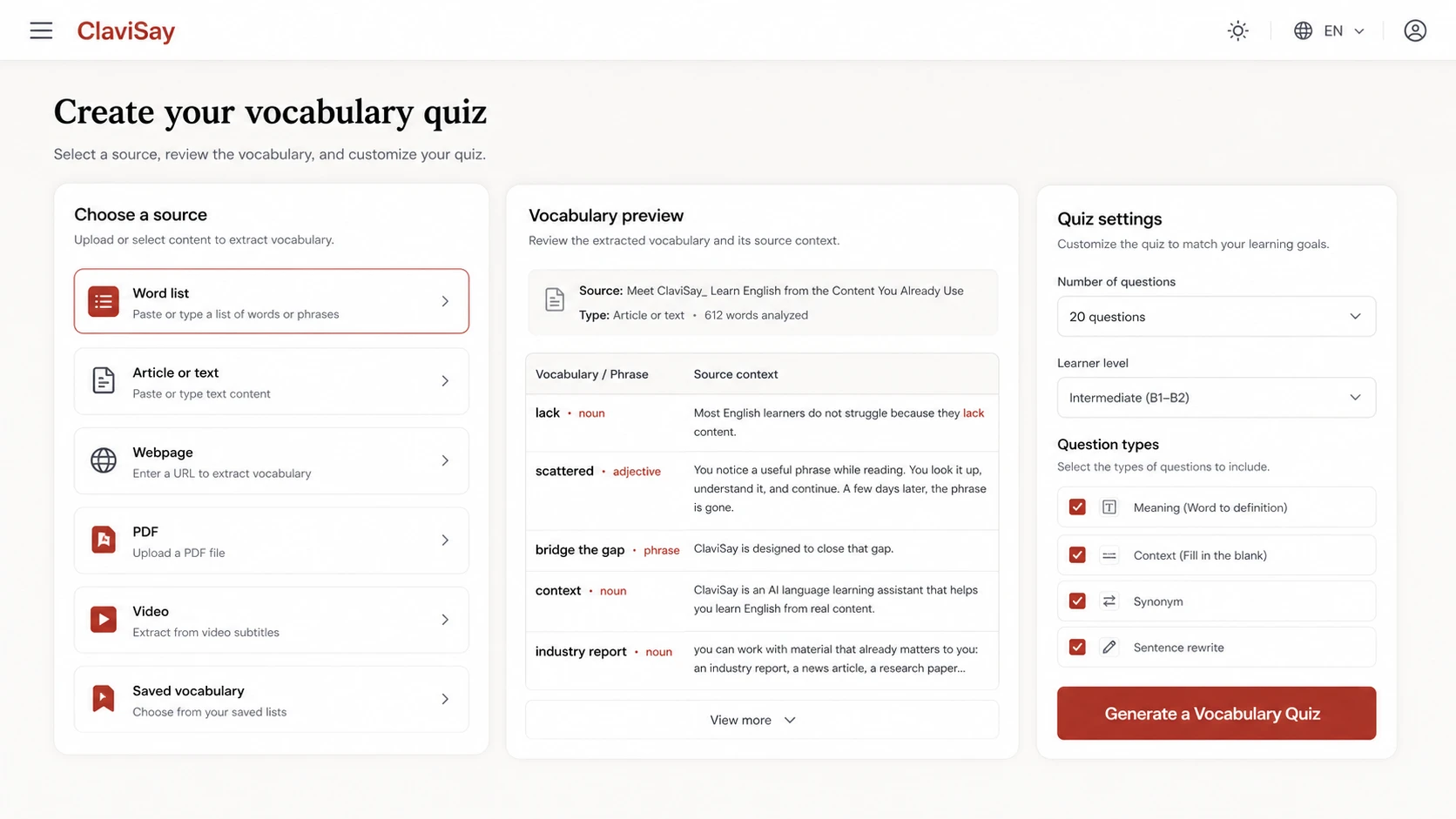
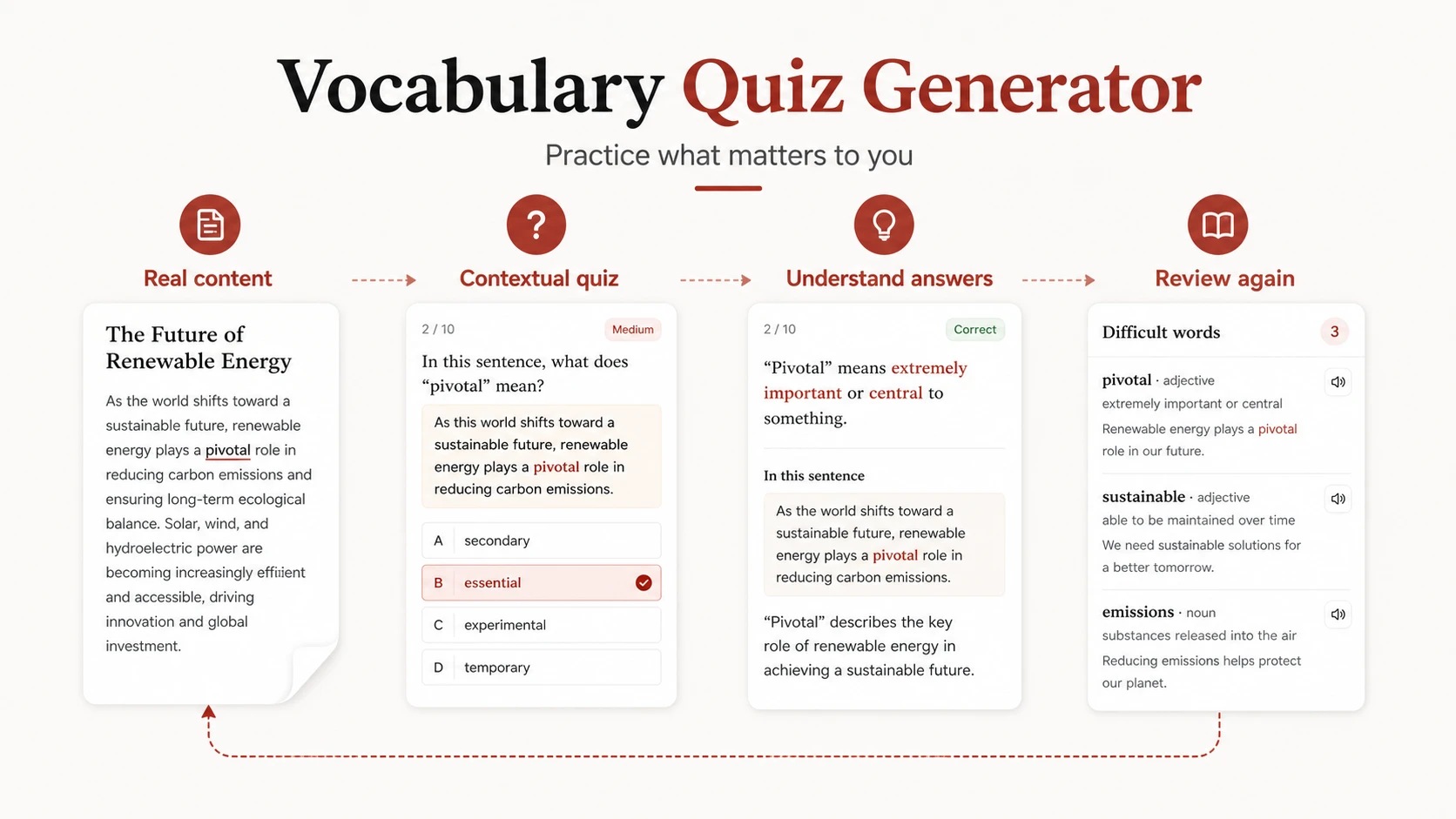
Generic vocabulary tests can tell you whether you know someone else's list. ClaviSay helps you generate practice from material that already matters to you: a word list, pasted passage, intended definition, or source sentence. The goal is not to produce more questions. It is to produce practice that reveals what you know and what still needs attention.
Make an online vocabulary test from a short word list, a longer document, or your saved vocabulary library. ClaviSay turns the selected material into focused questions while keeping the words, phrases, and original context available for review.
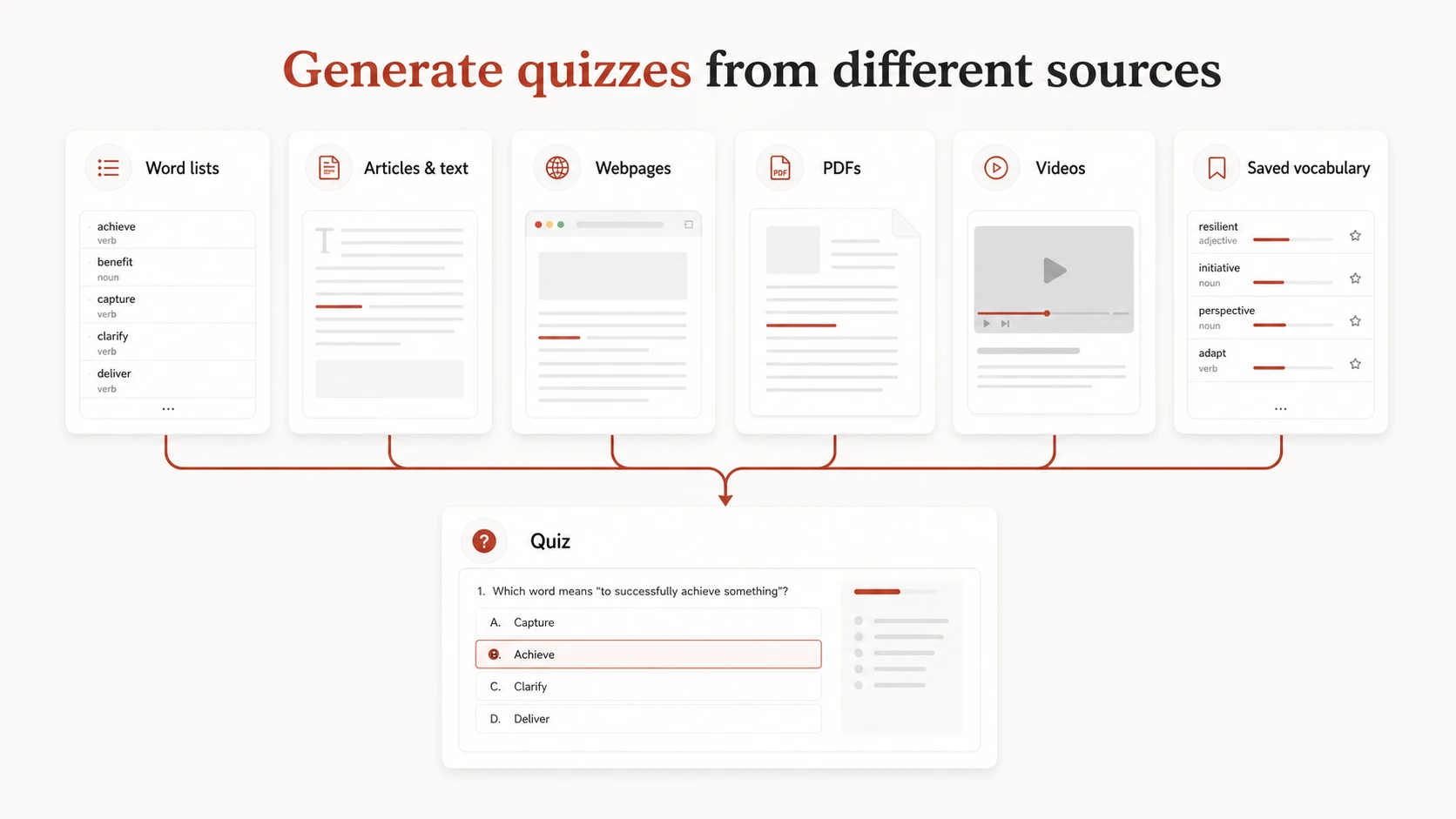
Use the vocabulary source that matches your current learning or teaching goal.
Paste target words for a class unit, exam topic, professional glossary, or vocabulary collected elsewhere.
Turn a news article, blog post, report, or online guide into vocabulary practice that stays connected to the source sentence.
Review vocabulary from reports, research papers, handouts, and course readings.
Save recent quizzes locally, reopen them for editing, duplicate a previous quiz, or remove drafts you no longer need.
Vocabulary knowledge has several layers. A balanced quiz can check meaning, sentence use, phrase patterns, word forms, and recall so learners see more than a score.
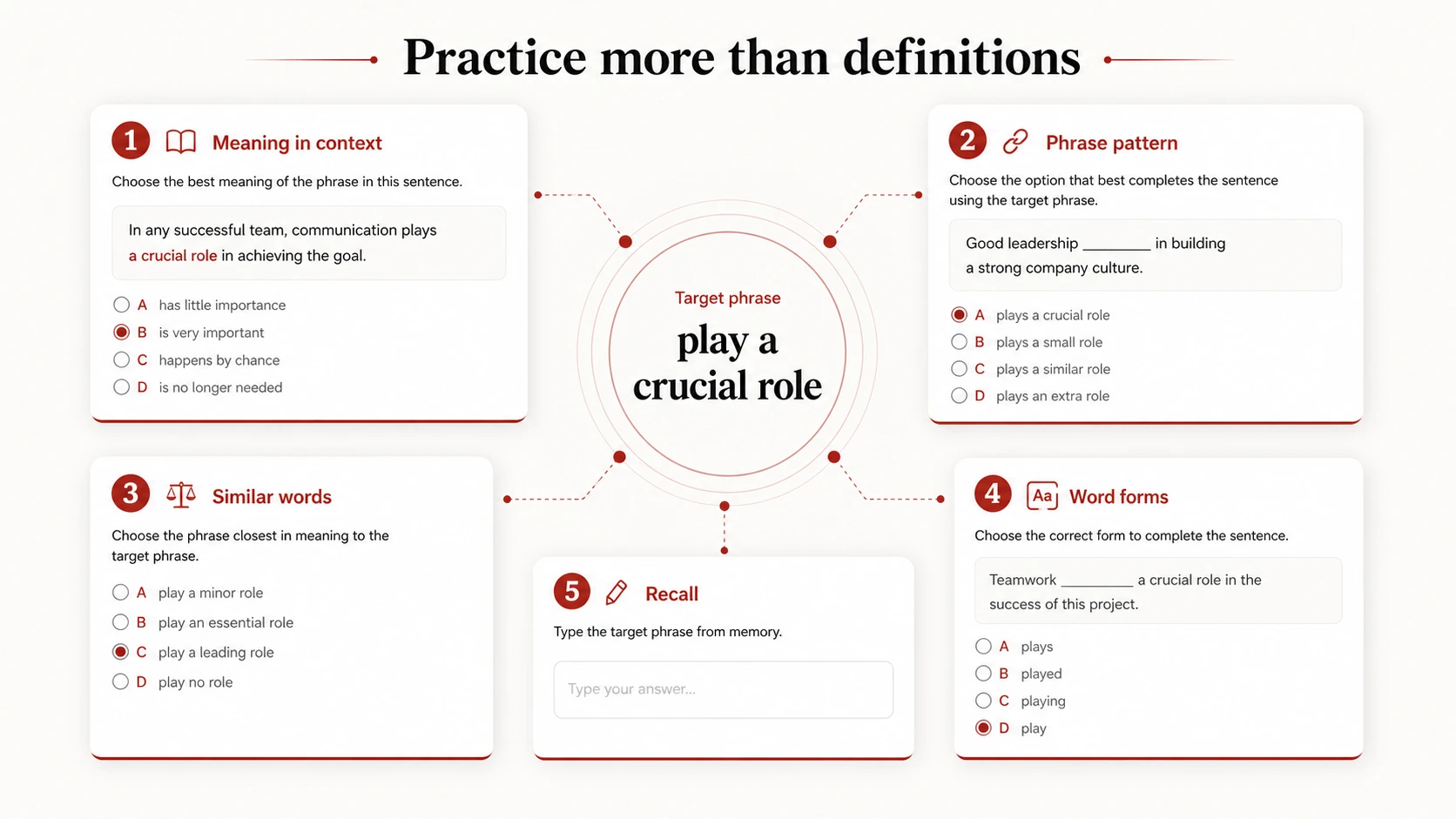
Mix recognition and retrieval so practice reflects how vocabulary is actually used.
Choose the meaning that fits the original sentence.
Select or recall the word that completes a natural sentence.
Review useful combinations such as raise a concern or reach a conclusion.
Check whether the sentence needs a noun, verb, adjective, or adverb.
Produce an answer before seeing options.
When an answer is wrong, learners need to know what caused the mistake. The quiz becomes a path back into the material: Check the answer, Revisit the original context, compare the meaning or phrase pattern, save or mark the item, then try it again in a future session.
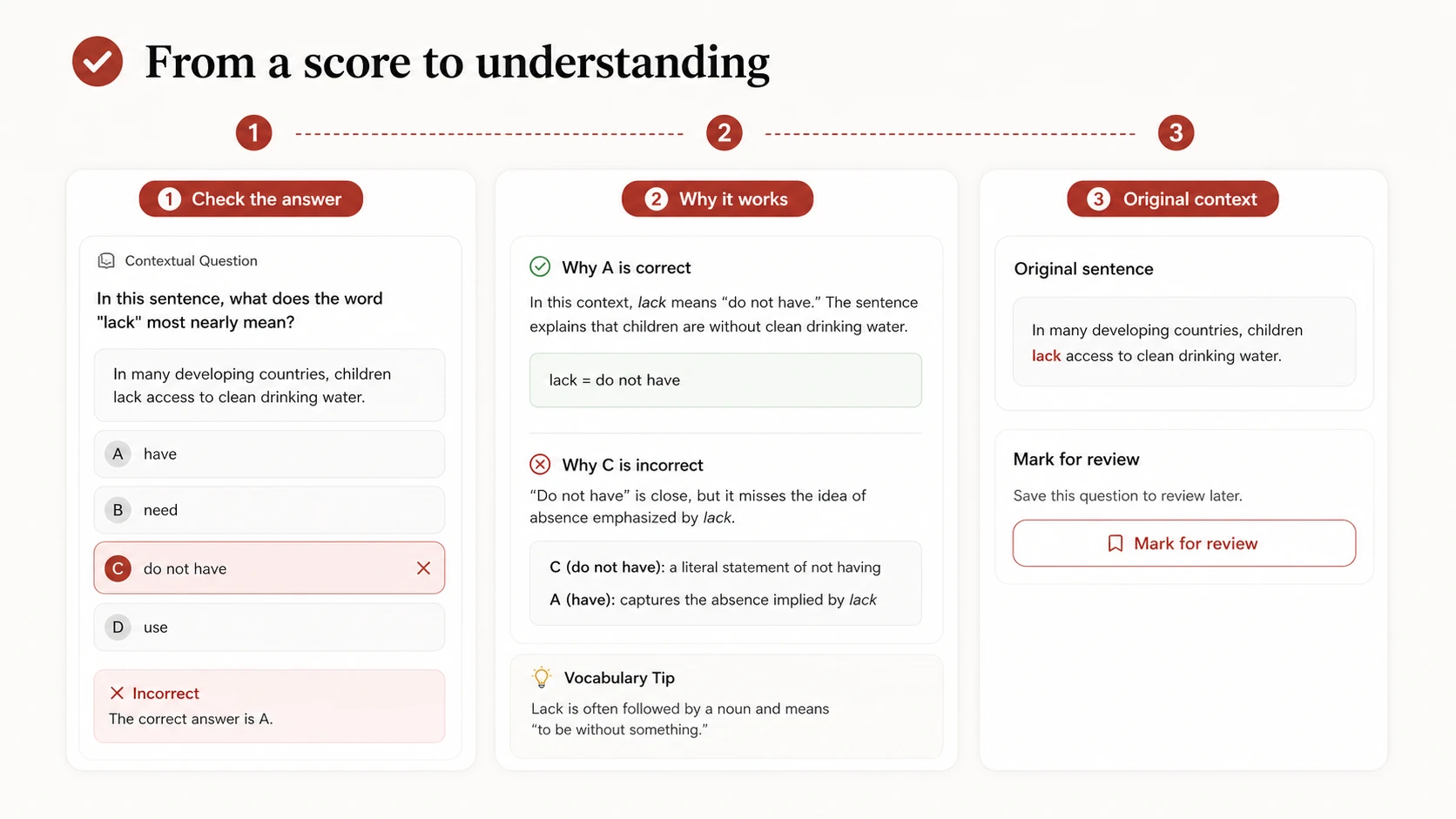
Move from source material to focused retrieval practice without rebuilding your vocabulary in another disconnected tool.
Paste a word list or classroom text. You can include definitions and example sentences for each target word.
Focus on the words and phrases that match your learning goal.
Create a short vocabulary quiz based on the selected material.
Try to recall the word or meaning before returning to the source.
Return to the original sentence, read the explanation, and review again.
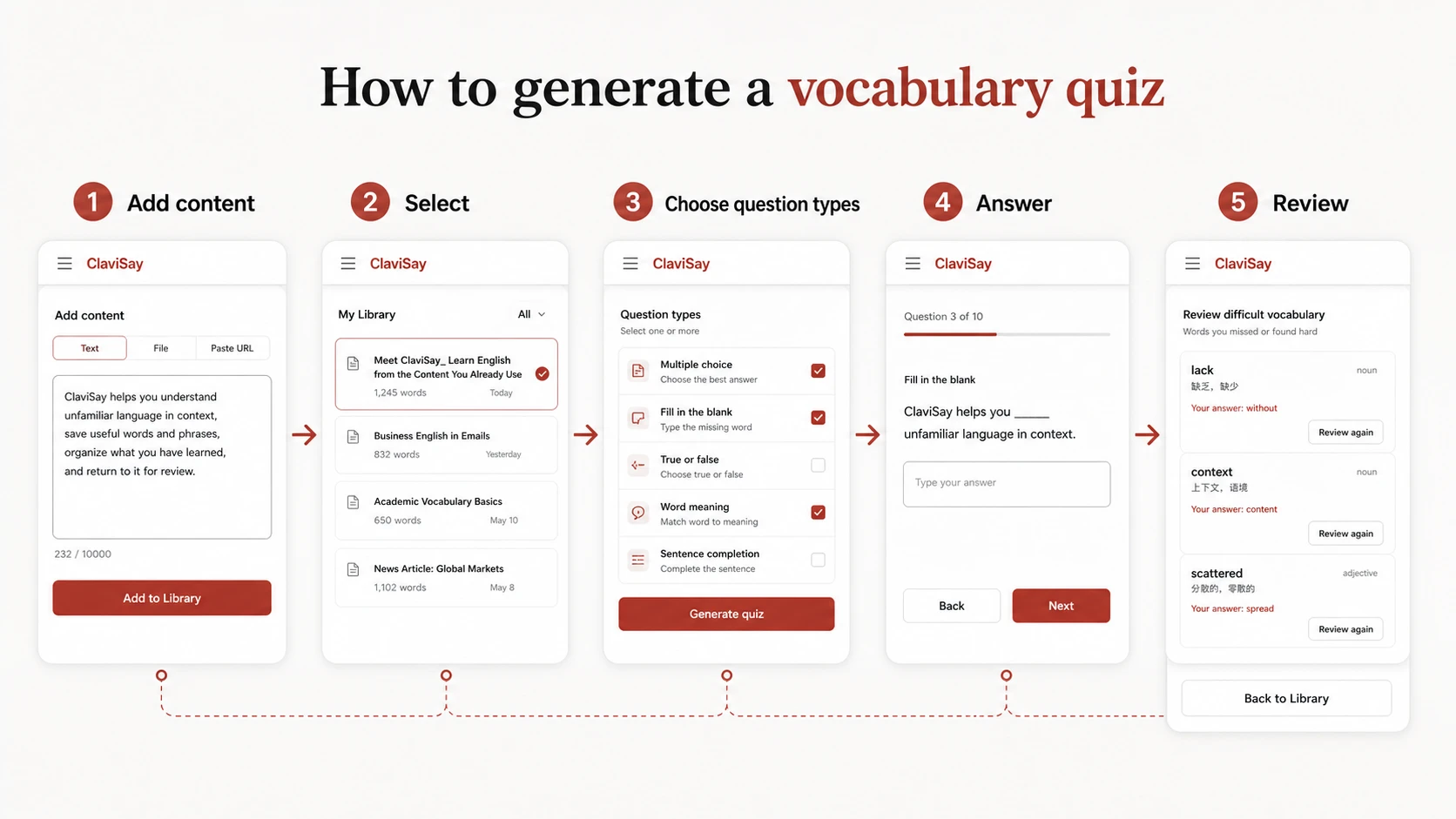
If you learn English through notes, class material, or article excerpts, quiz content can begin with the vocabulary you choose and review.
A vocabulary quiz generator can reduce repetitive preparation while keeping each draft question available for teacher review.
ClaviSay connects quiz practice to the same real content where vocabulary was discovered.
The process begins with the words, definitions, and examples you confirm.
Words and phrases can remain connected to the passage that gave them meaning.
Reading, explanation, saving, quiz practice, and review belong to one flow.
Saved language can return as practice instead of becoming an archive.
The quiz helps decide which vocabulary is ready and which needs another pass.
Even a strong generator cannot repair unclear source material automatically.
Context makes generated questions more useful.
Choose the meaning that matches the source.
Sometimes the phrase is more useful than the single word.
Short focused quizzes are easier to review.
Teachers should check clarity, level, and ambiguity.
Delayed review makes practice more durable.
A vocabulary quiz generator turns a word list or pasted text into questions for vocabulary practice or assessment.
Yes. ClaviSay includes a limited number of free quiz generations each day, and the current allowance is shown beside the tool.
Yes. Add a word list or source text, choose the question mix, generate the test, review the answer key, and export the finished quiz from your browser.
This page currently supports word lists and pasted text. PDF-based quiz generation should only be used after a PDF parser is available in the tool.
You can paste article or webpage text into the tool. Direct URL fetching is not part of the current on-page workflow.
Yes. Teachers can review and edit generated questions before using them for class practice, homework, or assessment. Every question and answer should be checked before it is assigned.
A quiz is usually a shorter, lower-stakes practice check, while a test is often longer or more formal. The same vocabulary maker can support either format by changing the question count and difficulty.
A good quiz reflects the vocabulary learners studied, includes context, and uses one clear answer.
For regular review, a short set of 8-15 target words is often manageable.
General quiz makers can create questions about almost any topic. ClaviSay focuses on language learning from real content.
The words you need are often already inside your lesson plan, study notes, or reading excerpt. ClaviSay helps turn that material into an editable quiz you can review, print, download, and reuse.
Generate a Vocabulary Quiz