You may already read more English than you realize: a BBC article in the morning, a Medium post during lunch, a Substack newsletter you saved for later, a product update at work, or a long PDF someone sent you. These reading moments can be useful for vocabulary growth, but only if you do something with the words you meet. Most of the time, learners read, understand enough to move on, look up a few words, and then forget the useful expressions within a day.
That is the real challenge behind how to build vocabulary. It is not just about reading more or memorizing longer lists. The harder part is turning real English content into something you can understand, save, review, and eventually use. A stronger vocabulary workflow starts with the English you already care about, because those words come with context, meaning, and a reason to remember them.
Why Random Word Lists Often Do Not Stick
Random word lists feel productive because they give you a clear task: memorize these words, check them off, and move to the next set. The problem is that many of those words are disconnected from real use. You may remember a translation for a few days, but still feel unsure when the word appears in an article, email, or conversation.
A word by itself is thin. A word inside a sentence has tone, grammar, topic, emotion, and purpose. Take the word “pressure.” In a BBC article, you might read about inflation putting pressure on households. In a Medium essay, someone might write about the pressure to stay productive. In a work document, a manager might mention pressure from a tight deadline. The basic meaning is related, but the usage changes with the situation.
This is why vocabulary from real reading is often easier to remember than vocabulary from isolated lists. You are not only learning what a word means; you are learning where it fits.
Start with Articles You Actually Want to Read
A common mistake is choosing English content only because it looks educational. That can work, but most learners stay more consistent when the reading material is actually useful or interesting. If you care about the topic, the vocabulary has a better chance of staying with you.
BBC or The Guardian articles are useful for news, social issues, the economy, and formal expressions. Medium essays and Substack newsletters are better for opinion writing, startup language, productivity topics, and abstract vocabulary. Product blogs and SaaS updates can help with business, technology, and product vocabulary. Reddit discussions are useful for casual expressions and everyday language that rarely appears in textbooks. Work documents, PDFs, and reports are especially valuable if your goal is professional English.
The source should match your real goal. If you want to understand global news, read news articles. If you want to improve workplace English, read business blogs and internal documents. If you want to sound more natural online, read forum discussions and comments. The point is not to read everything; it is to read content that gives you words you are likely to meet again.
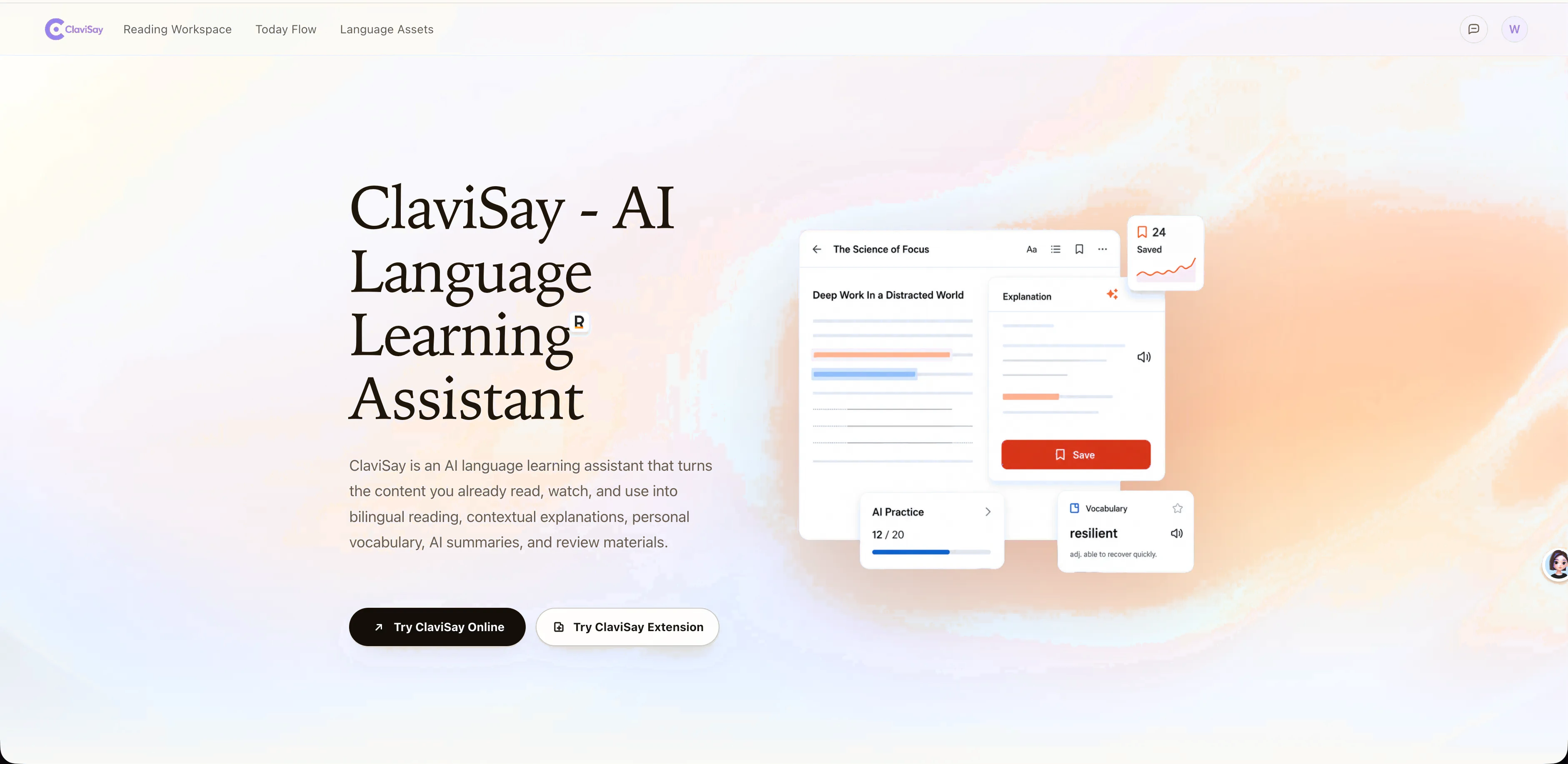
This is also where an AI Language Learning workflow can help. Instead of separating reading from learning, AI can support the moment when you meet a word, sentence, or phrase that is worth understanding more deeply.
Do Not Look Up Every Unknown Word
Many learners lose momentum because they stop at every unfamiliar word. After a few minutes, the article becomes a dictionary exercise, and the original idea disappears. This is frustrating because the learner is doing a lot of work but not necessarily building better reading ability.
A better rule is to save only the words that matter: words that affect your understanding, appear more than once, or feel useful for your own writing, work, or study. When reading a BBC article, you do not need to save every political title or technical term. Focus on the words that shape the story, such as “surge,” “forecast,” “pressure,” or “slowdown,” especially if they appear several times or help explain the main point.
The same logic applies to other types of content. In a Medium essay, the most useful vocabulary may be phrases like “mental load,” “creative momentum,” “a pragmatic approach,” or “the trade-off is clear.” In a work document, it may be phrases you can reuse later, such as “align on priorities,” “reduce friction,” “follow up on this,” or “move forward with the plan.” A strong vocabulary habit is selective, not exhaustive.
Reading rule: Save words that change your understanding, repeat in the article, or look useful for your own future writing and speaking.
Guess the Meaning Before You Confirm It
Before looking up a word, spend a few seconds with the sentence. Look at the topic, the tone, the surrounding words, and the next sentence. Is the author giving an example? Making a contrast? Explaining a cause? This small pause makes you an active reader instead of someone who only receives translations.
For example, if you read, “The company took a more pragmatic approach after the first launch failed,” you can probably guess that “pragmatic” means practical, realistic, or focused on what works. Checking the meaning afterward confirms your guess, but the mental effort you made first helps the word stick.
This process is slower than instant translation, but it builds better reading ability over time. You become more comfortable with unfamiliar English because you learn how to use context clues before reaching for an answer.
Save the Word with the Sentence Where You Found It
A vocabulary note without context is easy to forget. Many learners save notes like “pragmatic = practical,” which is useful but incomplete. A stronger note includes the original sentence, the meaning in that sentence, a useful phrase, and perhaps one example of your own.
For example, you might save “pragmatic” with the sentence: “The company took a more pragmatic approach after the first launch failed.” The meaning here is “focused on what works in reality, not just theory.” The phrase “a pragmatic approach” is also worth saving because it is more reusable than the single word alone. You could then write your own sentence: “We need a pragmatic solution that our small team can ship this week.”
This kind of note helps because it keeps the word attached to a real situation. It is especially useful for flexible words such as “drive,” “scale,” “sharp,” “position,” “leverage,” and “commitment,” which can change meaning depending on the article. If you only save the translation, you may miss the usage.
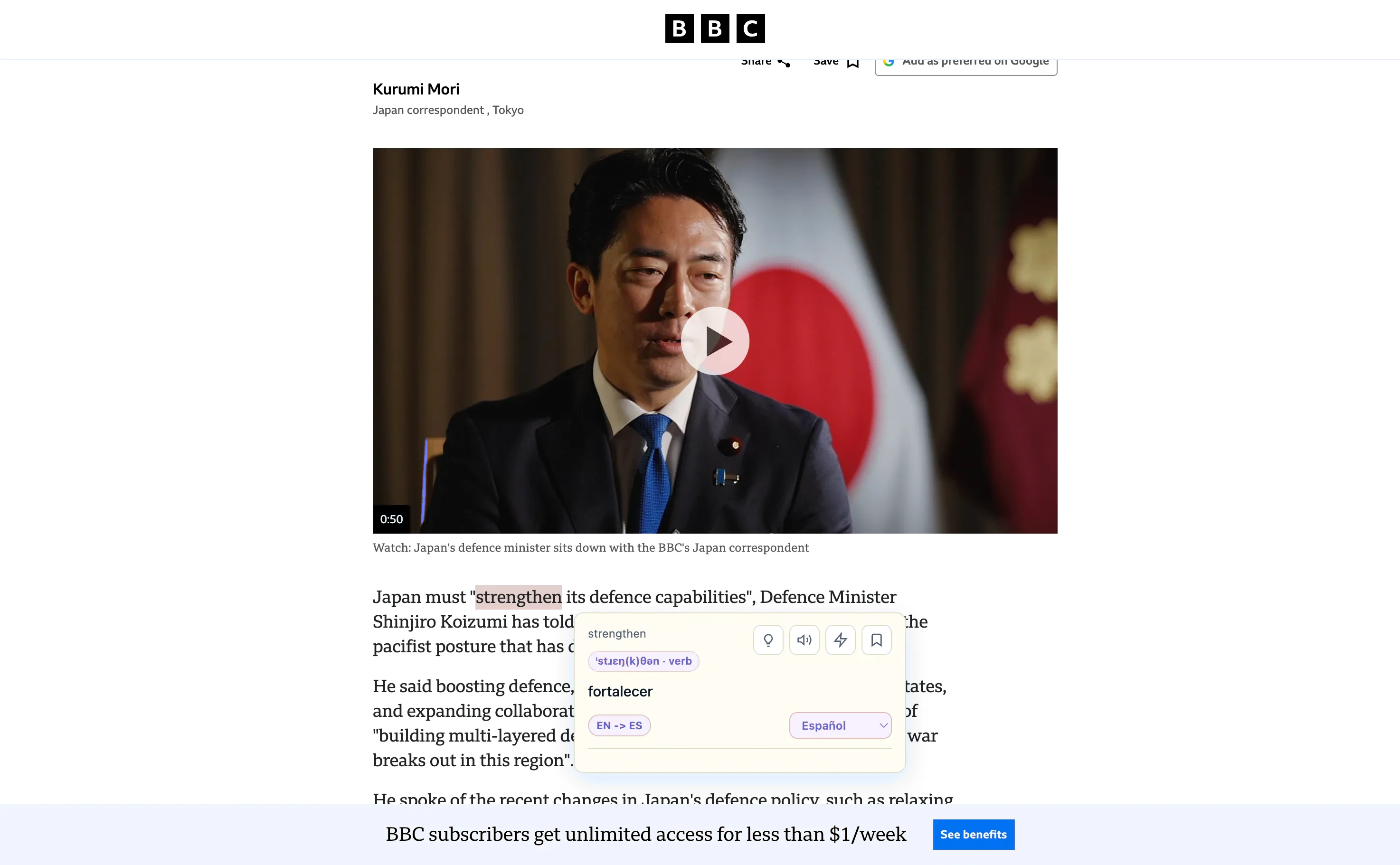
A reading-based vocabulary builder can help here because it keeps the word, sentence, and review process connected. The goal is not simply to store more words, but to preserve enough context, so the word still makes sense when you come back to it later.
Build a Small Vocabulary List from Each Article
A good article can contain dozens of unfamiliar words, but saving all of them usually creates more work than progress. If your vocabulary list becomes too long, you are less likely to review it. A smaller list is easier to maintain and often more effective.
For most articles, saving 5 to 10 useful words or phrases is enough. Choose words that helped you understand the article, appeared more than once, matched your learning goals, or seemed useful for future writing and speaking. From a BBC article about the economy, your list might include “inflation,” “forecast,” “consumer confidence,” “slowdown,” and “recovery.” From a Medium essay about focus, it might include “attention span,” “mental clutter,” “deep work,” “distraction-free,” and “creative momentum.”
The list should reflect the article you actually read. That is what makes it personal. You are not building a generic word bank; you are building a vocabulary record from your own reading history.
Review After Reading, Not During Reading
Reading and reviewing are different activities. During reading, your main job is to follow the idea of the article. If you try to memorize every word at the same time, you will probably lose the flow. It is better to mark or save useful words while reading, finish the article, and review the vocabulary later.
Good review should be active. Instead of looking at a word and immediately checking the translation, try to remember what it meant in the original sentence. Then look at the sentence again and test whether your memory makes sense. You can also say the phrase out loud or write your own example.
If you saved the word “resilient” from the sentence “The resilient team kept going despite the setbacks,” review it by asking what “resilient” means in that sentence. Then make a sentence of your own, such as “A resilient learner keeps reading even when the article is difficult.” This is much stronger than passively rereading a list.
A contextual vocabulary builder for English articles can make this easier by helping you save the word while reading, keep the original sentence, and return to it later for practice.
Use the Words in Your Own Expression
A word is not truly yours just because you recognized it once. It becomes part of your vocabulary when you can understand it in context and use it in your own sentence, message, email, or conversation.
After reviewing a word, write one short sentence. It does not need to be perfect. If you saved “pragmatic” from a Medium article, you might write, “We need a pragmatic plan that works with our current resources.” If you saved “pressure” from a BBC article, you might write, “Rising costs put pressure on small businesses.” If you saved “momentum” from a productivity essay, you might write, “Reading one article every morning helps me build learning momentum.”
This step turns passive vocabulary into usable vocabulary. It also shows you which words you truly understand and which ones still need more exposure.
A Practical Workflow for Building Vocabulary While Reading
A simple workflow works best. Choose an article you care about, read it first for the main idea, and avoid stopping for every unknown word. Mark the words and phrases that affect meaning or seem useful, guess their meaning from context, confirm the meaning, and save them with the original sentence. After reading, review a small set of words and use the best ones in your own sentences.
The workflow can be summarized like this: Read real content → Understand words in context → Save useful words and phrases → Review regularly → Use them in your own expression. This is a more practical answer to how to build vocabulary than simply trying to memorize more words, because it fits into something you already do.
You are already reading articles, websites, newsletters, and documents. The difference is whether useful vocabulary disappears after reading or becomes part of a repeatable learning loop.
Where ClaviSay Fits into This Workflow
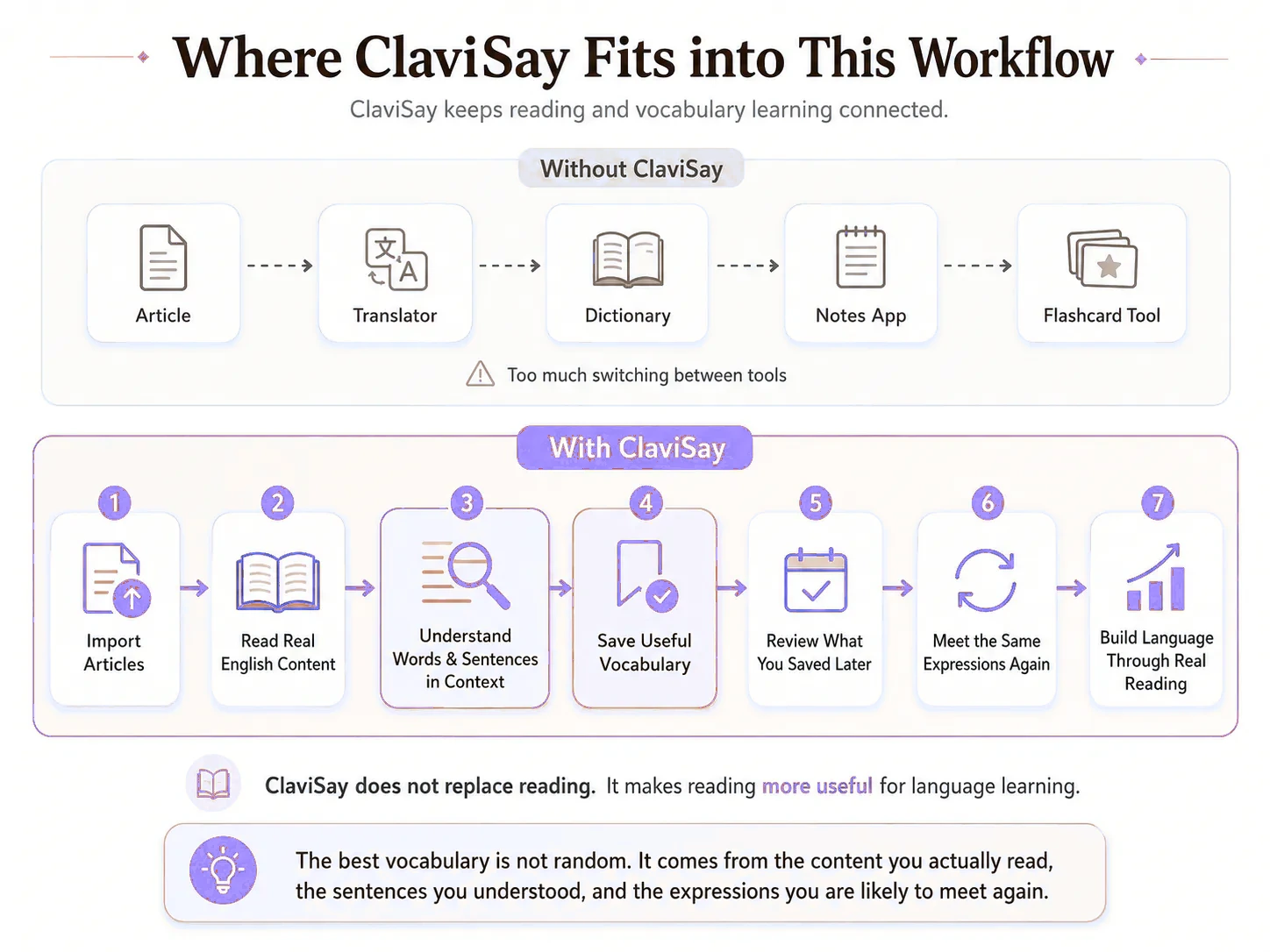
This is the workflow ClaviSay is trying to make easier. Instead of switching between an article, a translator, a dictionary, a notes app, and a flashcard tool, ClaviSay helps keep the reading and vocabulary process connected.
You can import articles, read real English content, understand words and sentences in context, save useful vocabulary, and review what you saved later. It is not meant to replace reading. It is meant to make reading more useful for language learning.
That matters because the best vocabulary is usually not random. It comes from the content you actually read, the sentences you actually understood, and the expressions you are likely to meet again.
Final Thoughts
If you want to know how to build vocabulary, do not start with the longest word list you can find. Start with the English you already meet: a BBC article, a Medium essay, a newsletter, a work document, a product blog, or a PDF you need to understand.
Read it carefully, notice the words that matter, understand them in context, save the original sentence, review later, and try using the words yourself. This may feel slower than memorizing a random list for one afternoon, but it is much more likely to last.
The vocabulary you remember best is often the vocabulary you found while trying to understand something real.
Try the workflow: Import real English content, save useful words with context, and turn your reading history into a repeatable vocabulary loop. Start building vocabulary.